You Have 10,000 Followers and Still Feel Completely Alone — Here's Why That Makes Total Sense
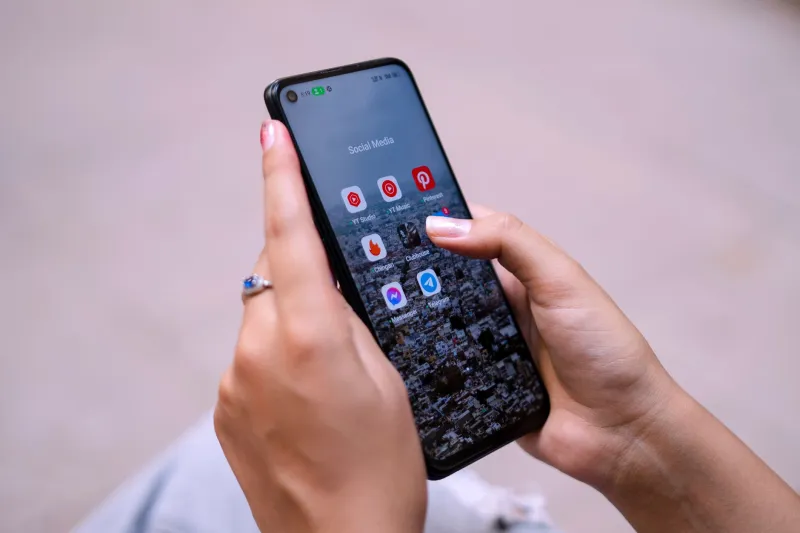
Let's be honest about something that almost nobody wants to say out loud: you can post something deeply personal, watch the likes roll in, read fifteen comments that say "this is SO me," and still close your phone feeling like no one in the world actually sees you.
That's not a personal failure. That's not ingratitude. That's just what happens when you mistake visibility for intimacy.
We're living through what researchers are increasingly calling a loneliness epidemic — and the cruel twist is that it's happening during the most "connected" era in human history. Americans report having fewer close friends than they did twenty years ago. The U.S. Surgeon General has literally issued an advisory on loneliness as a public health crisis. And yet most of us are spending four, five, six hours a day on platforms specifically designed to make us feel like we're part of something.
Something is very, very off.
The Illusion of Intimacy Is Sophisticated Now
Here's the thing about modern social platforms — they're genuinely good at manufacturing the feeling of closeness. When someone replies to your Instagram Story with a laughing emoji, your brain registers a small social reward. When a stranger DMs you to say your caption made their day, that's a real moment of warmth. None of that is fake, exactly.
But there's a difference between warmth and intimacy. Warmth is nice. Intimacy is what actually keeps you from feeling alone at 2 a.m.
Intimacy requires reciprocity. It requires someone who knows the version of you that doesn't get posted — the version that's tired or confused or not doing the thing you said you were going to do. It requires someone who calls you back, who remembers the thing you mentioned three weeks ago, who shows up when it's inconvenient for them.
A follower, even a loyal and lovely one, almost never has access to that version of you. And if you're being honest? You probably don't give them access. Because the architecture of social media doesn't reward that kind of vulnerability — it rewards the curated kind. The kind that's honest enough to feel real but polished enough to perform well.
Broadcasting Versus Being Known
There's a quiet psychological toll that comes with broadcasting your life regularly. You start to develop what you might call a public self — a version of you that's been slightly optimized for an audience. It's not fake. It's just... edited. And over time, that edited version can start to feel like the only version you know how to show people.
This is where it gets a little heartbreaking. The more you broadcast, the more practiced you become at presentation. And the more practiced you become at presentation, the harder it gets to just be with someone — without framing it, without the internal instinct to think about how you'd describe this moment later.
You can end up with thousands of people who feel like they know you, and almost no one who actually does. And because you're getting some form of social feedback constantly, you don't always notice how starved you are for the real thing until something hard happens and you realize you don't know who to call.
Why Quantity Became a Substitute for Quality
Social platforms are built on engagement metrics. More followers, more reach, more comments — these numbers are legible, trackable, and they feel like evidence that you matter to people. And in a culture that's always been a little too comfortable equating worth with measurable output, that's a seductive deal.
Real friendships don't come with metrics. You can't quantify the value of a friend who drops everything when your relationship falls apart, or who texts you something stupid and specific that only makes sense to the two of you. That kind of connection is inefficient and slow and doesn't scale.
So we've unconsciously started substituting the thing that scales for the thing that doesn't. Not because we're shallow, but because the scalable thing is right there, delivering little hits of social reward all day long, while the real thing requires effort and vulnerability and showing up even when you're not at your best.
How to Tell the Difference Between an Audience and a Friend
This isn't about deleting your accounts or deciding that online relationships are worthless. Some of my own genuinely meaningful connections started in comment sections or DMs. The internet can be a real place where real things happen.
But it's worth getting honest with yourself about which relationships in your life are actually reciprocal — and which ones only flow one direction.
A few questions worth sitting with:
Does this person know something about you that you've never posted? If the answer is no for most of the people you'd call your "community," that's a signal worth paying attention to.
Have you ever had a hard conversation with them? Not a vulnerable caption — an actual conversation where something was at stake and you didn't know how it would go?
Would they notice if you went quiet for a month? Not your analytics. Them. Would a specific person reach out to check on you?
Do you feel more like yourself or more like a version of yourself around them? That distinction is subtle but it's everything.
The Harder, Better Work
Building real connection in 2024 is genuinely countercultural. It's slower. It's messier. It requires you to be interested in other people in ways that don't benefit your brand or your reach. It requires you to sometimes be the one who reaches out first, who follows up, who remembers.
It also requires being willing to be known — not just seen. Those are different things. Being seen is passive. Being known is something you have to let happen, which means dropping some of the careful presentation and letting someone encounter the unedited version.
That's uncomfortable. It's also the only thing that actually works.
If you're feeling lonely despite a full inbox and a growing following, you're not broken. You're just running on the wrong fuel. Visibility feels like connection until you need connection — and then the gap becomes very clear, very fast.
The good news is you already know what real intimacy feels like. You've had it before, even if it's been a while. Start there. Think about who in your life actually knows you, and invest in that. Not your follower count. Not your engagement rate.
The people who show up when the algorithm is irrelevant — those are your people. Go find them, or go back to them. They're worth more than any number on a dashboard.