Liking Different Things Now Doesn't Make Your Old Self a Mistake
Let me paint you a very specific picture.
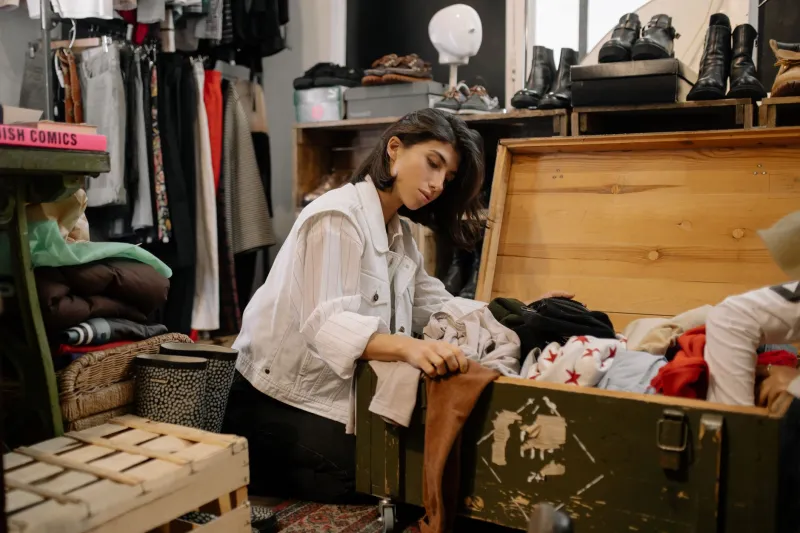
You're standing in your closet on a Tuesday morning, pulling out the oversized graphic tee that used to feel like you — like a whole personality, honestly — and something feels off. Not bad, exactly. Just... off. Like wearing someone else's handwriting.
And then you feel something weirder than confusion: guilt. Because who are you to suddenly not like the thing you built an entire aesthetic around? What does it say about you that the maximalist, vintage-everything, loud-print phase you documented so enthusiastically on Instagram for two years now feels like a costume?
Here's the thing nobody really talks about: changing your taste is uncomfortable not because something went wrong, but because we've been quietly taught to treat consistency as a virtue — even when it means staying loyal to a version of ourselves we've genuinely outgrown.
Why We Weaponize Our Own Past Against Ourselves
There's a specific psychological trap that happens when your preferences start shifting. Your brain, helpful as always, starts running a little comparison loop: If you like this now, and you liked that before, and those two things are different... doesn't that mean one of them was wrong?
And because we don't love admitting we were wrong, we either a) force ourselves to keep loving the old thing, or b) retroactively trash it to justify the new thing. Neither of those is actually healthy.
This plays out everywhere. In fashion — the person who was all in on cottagecore suddenly gravitating toward sleek minimalism and then feeling like a sellout. In content — the creator who built an audience around one aesthetic and now genuinely wants to make something different but is terrified of losing people. In home decor, in music taste, in the books you reach for, in the restaurants you want to go to.
The shift happens. The guilt follows. And then, if you're not careful, the stagnation sets in — because staying the same feels safer than explaining why you changed.
The Personal Brand Trap
Social media made this so much worse, by the way.
When you've spent years building a recognizable online presence around a particular look, vibe, or aesthetic, your taste starts to feel like a product. And products aren't supposed to change without warning. Your followers signed up for a specific thing. Your friends know you as a specific kind of person. Your own highlight reel has been curating a consistent story.
So when your actual, lived preferences start diverging from the version of you that exists online — or even just in your social circle — there's this bizarre pressure to either hide the shift or justify it loudly. To explain yourself. To prove that the new direction is more evolved, more intentional, more something than what came before.
But you don't actually owe anyone that explanation. Your taste is not a brand promise. It's a living thing.
Evolution Doesn't Require an Apology Tour
Here's a reframe that might help: your past preferences weren't wrong. They were appropriate to that moment. The graphic tee era, the maximalist phase, the three years when you were obsessed with a very specific aesthetic that you now cringe at a little — all of it made sense for who you were then, what you needed then, what felt true then.
Taste is responsive. It shifts with your life circumstances, your exposure to new things, your emotional state, your age, your relationships. The fact that it changed isn't a verdict on who you used to be. It's just evidence that you're still paying attention.
Some of the most stylish, most creatively alive people I've ever come across are the ones who refuse to be held hostage by their own previous choices. They wear what feels right today. They decorate their homes for who they are now, not who they were when they first moved in. They pivot their creative work when it stops feeling honest — even knowing it'll confuse some people.
That's not inconsistency. That's integrity.
How to Actually Let Yourself Change
Start by separating two things that often get tangled: changing your mind and being wrong. They're not the same. Changing your mind is just what happens when you keep learning and experiencing things. Being wrong implies there was a correct answer you missed. Most aesthetic and creative choices don't have a correct answer — they just have answers that fit better or worse at different points in your life.
Next, give yourself a transition period without the pressure to explain it. You don't have to post about your aesthetic evolution. You don't have to announce that your style is shifting. You can just... quietly start buying different things. Wearing different things. Making different creative choices. See how it feels before you turn it into content or conversation.
And finally — and this is the big one — stop asking for permission from your own past. The version of you who loved the thing you no longer love isn't watching. She's not judging. She was just doing her best with what she had at the time, exactly like you're doing now.
Your taste is allowed to grow up with you. Actually, it's supposed to.